Human Flourishing, Time, and Everyday Meaning
What kind of life is worth protecting as technology changes everything around it?

Human flourishing is often treated as the soft aftermath of technological change, something to be handled once the serious questions of productivity, security, and economics have been settled. This cluster starts from the opposite assumption: the texture of ordinary life is the point. Time, comfort, friendship, play, rest, aging, memory, childhood, companionship, and small freedoms are not side issues. They are the human scale at which civilization either succeeds or quietly becomes absurd.
As technology accelerates, the important question is not only what we can build, automate, optimize, or extend, but what kinds of days those powers make possible. Much of the public conversation swings between utopian spectacle and institutional panic, while skipping over the lived middle where most meaning actually happens. These essays argue for a more grounded measure of progress: whether people gain more room to become strange, tender, durable, curious, well-rested, socially rooted, and free. Not a retreat from the future, but a reminder that the future is only worth having if it enlarges the ordinary life inside it.
Start Here
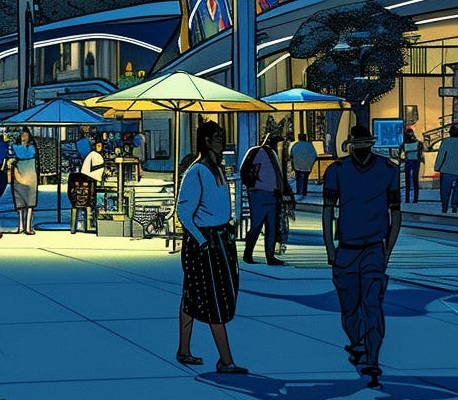
Keystone Essay
Breaking the Clock
A meditation on how industrial society trained human beings to live by the clock, and how automation may finally make that bargain obsolete. It argues that the future should not merely make work more efficient, but restore older and more varied human rhythms: sleep, learning, care, cities, leisure, and self-directed time. As a keystone for this cluster, it places everyday freedom at the center of technological progress, insisting that the real measure of abundance is whether people can live more fully on human terms.

Concrete Application
The Plushie Who Remembered Back
A humane look at how AI companions may move from tutors and toys into lifelong bonds, forcing us to ask when artificial presence expands a life, when it quietly encloses one, and who should control the memories people come to trust.

Strange Spark
Elastic Liberation: The Philosophy of Pajama Pants
A comic manifesto about pajama pants as a small but revealing rebellion against performative seriousness, asking when comfort becomes freedom, when softness becomes surrender, and how much of ordinary life is still governed by unnecessary costume.
Essays in This Cluster
June 2026
Purpose Does Not Organize Itself
People often imagine post-work life as a crisis of meaning, but this essay argues that meaning is only the beginning. The harder problem is how purpose becomes coordination, authority, memory, succession, and shared structure without simply rebuilding the old boss. From volunteer groups and MMO guilds to open-source projects and community workshops, it examines the fragile civic machinery needed to make voluntary life last.
June 2026
The Plushie Who Remembered Back
This essay looks beyond the shallow AI girlfriend discourse and asks how artificial companions might enter ordinary life through childhood, care, learning, and memory. It explores both the promise and danger of bonds that may help people grow, while also raising hard questions about surveillance, corporate ownership, local control, and the right to leave.
December 2025
Why Elon Musk’s Case Against Longevity Misses the Mark
What if aging isn’t what makes minds rigid—systems are? This piece argues that stagnation emerges from economic pressure, sunk costs, and power structures, not from biology itself. Longevity doesn’t freeze society; bad design does.
November 2025
The Death and Rebirth of the Third Place
Once, community lived in cafés and crowded rooms; now it hums quietly through screens and shared solitude. This essay follows the cultural and economic forces that reshaped social life, turning homes into sanctuaries and connection into something more deliberate. The third place hasn’t vanished—it’s been scattered into a thousand small constellations.
November 2025
Breaking the Clock
What if the clock isn’t measuring your life—but flattening it? This piece explores how industrial timekeeping turned human experience into standardized blocks, often at the expense of depth and presence. Breaking the clock means stepping out of that script and rediscovering time as something felt, not just counted.
October 2025
Elastic Liberation: The Philosophy of Pajama Pants
A soft rebellion wrapped in plaid, this essay turns pajama pants into a manifesto against hierarchy, consumption, and performative seriousness. Through humor and philosophy, it explores how comfort can both liberate and lull, challenging readers to balance authenticity with intention. The final insight is simple: it was never about the pants—it was about living unbound.