The Public Domain Is About To Get Weird
Public-domain characters are entering a world where anyone can build with them
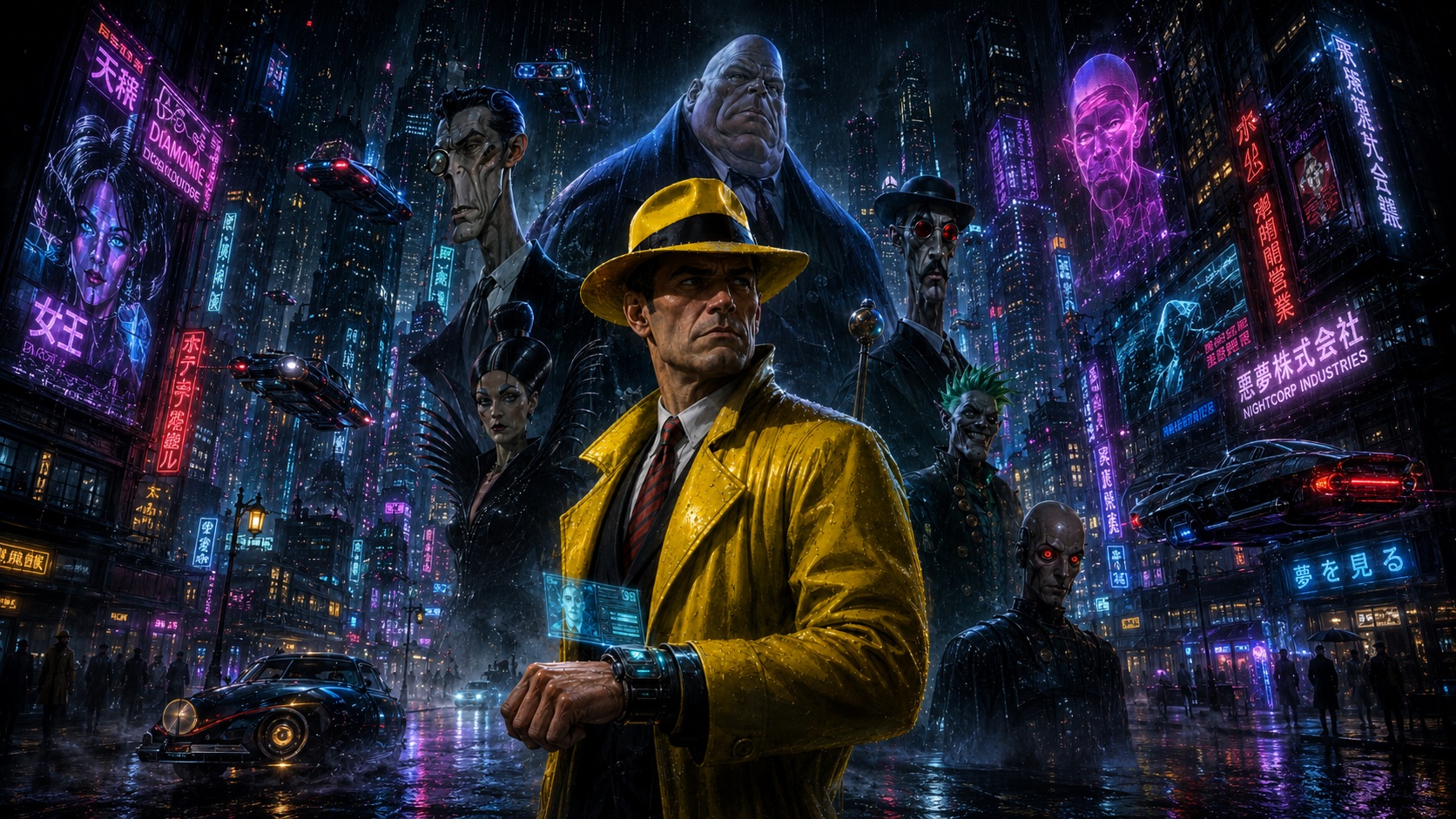
Mickey Was The Beginning, Not The Story
On January 1, 2024, the earliest version of Mickey Mouse entered the public domain.
For a brief moment, this felt like a strange little cultural earthquake. Steamboat Willie Mickey, the black-and-white mouse at the beginning of Disney’s empire, was no longer locked entirely inside Disney’s walls. People could use him. People could remix him. People could turn him into jokes, horror films, posters, animations, comics, games, or whatever else the internet decided to cough up before breakfast.
Most of the coverage focused on the obvious headline:
Mickey is public domain now.
That was true, but incomplete.
The more interesting question was not what happens to Mickey in 2024. The more interesting question was what happens after Mickey. Because Mickey was not a one-off event. He was the first visible sign of a much larger queue.
Behind him stand other Disney characters. Behind them stand classic comic book heroes. Behind them stand pulp adventurers, radio icons, newspaper-strip legends, early animation mascots, science fiction heroes, detectives, cowboys, and caped figures from the first great age of mass media.
The public domain is not opening all at once. It is opening one year at a time.
That distinction matters.
If Mickey entering the public domain had been an isolated curiosity, it would mostly be a legal footnote with a funny hat. But it is not isolated. It is part of a conveyor belt. Every January, another set of works ages out of copyright. Every January, another small portion of twentieth-century culture crosses from private control into public use.
The interesting part is not only the mouse.
The interesting part is the line forming behind him.
The Controlled Release Of The Twentieth Century
It is tempting to think of public-domain milestones as isolated events.
Mickey enters the public domain. People talk about it for a week. A few novelty projects appear. The internet makes its jokes. Then everyone moves on.
That framing misses what is actually happening.
Public-domain law does not operate like a dam bursting. It operates like a clock.
Every year, another set of works reaches the end of its copyright term. Every year, another gate opens. Most of the time the process is so gradual that it barely attracts attention.
But gradual does not mean insignificant.
Behind Steamboat Willie Mickey stands a growing procession of familiar faces. Pluto is approaching. Goofy is approaching. Donald Duck is approaching. The version of Mickey that many people actually picture when they think of the character—the sorcerer's apprentice from Fantasia—is approaching as well.
Disney is only one part of the story.
The queue extends far beyond animation. Early versions of Batman and Superman are drawing closer. The Lone Ranger is moving through the pipeline. Buck Rogers is moving through the pipeline. Characters that once defined comic books, radio dramas, newspaper strips, pulp magazines, and Saturday matinees are steadily advancing toward the same destination.
The public domain is not suddenly opening. It is slowly flooding.
That distinction becomes more important with every passing year.
Most discussions treat these releases as disconnected legal events. In reality, they are part of a single long-running process. A vast portion of twentieth-century culture was placed under copyright protection. Now, one expiration date at a time, those protections are beginning to age out.
Nothing dramatic happens on any particular January 1st. There are no fireworks. No ceremonies. No official handover.
Yet each year the commons grows a little larger.
A mouse one year.
A duck another.
A masked detective after that.
A visitor from Krypton not long after.
The individual releases matter. The pattern matters more.
What we are witnessing is not a single character entering the public domain.
It is the controlled release of an entire century.
Why This Time Is Different
Public-domain law has always mattered, but for most creators it did not solve the whole problem.
It solved the legal problem.
It did not solve the production problem.
If a character entered the public domain in 1980, that did not mean anyone could suddenly make a film, publish a polished comic, manufacture merchandise, or build a game around them. They might have the right to use the character, but rights are not the same thing as capability.
You still needed money. You still needed artists. You still needed animators, printers, editors, programmers, distributors, manufacturers, and time. A public-domain character could be legally available while remaining practically out of reach for most people.
The door was open.
The tools were somewhere else.
That is what makes this moment different.
The next wave of public-domain characters is not entering the world of 1980. It is entering a world of generative media, cheap distribution, print-on-demand services, game engines, online storefronts, fan communities, and increasingly capable creative tools.
A teenager with a laptop can now attempt projects that once required a small studio. Not always well. Not always legally cleanly. Not always with good taste, because the internet remains the internet and will continue committing its little crimes against restraint. But the basic capability is there in a way it simply was not before.
One person can generate concept art. They can lay out a comic. They can produce illustrations, prototype a game, create character voices, assemble an audio drama, animate short scenes, or design merchandise. None of this guarantees quality, but it changes the scale of who gets to try.
The public domain is gaining industrial machinery.
That is the real shift.
Historically, public domain meant that culture became legally reusable. Now it increasingly means that culture becomes practically reusable as well.
This does not erase the need for taste, judgment, storytelling, editing, or craft. If anything, those become more important. When production gets easier, attention becomes harder to earn. A thousand rushed Mickey projects can appear overnight and most of them can still be terrible.
But even that tells us something important.
The bottleneck has moved.
The central question is no longer simply, who has permission?
It is, who can make something worth caring about once permission is no longer the limiting factor?
That is a very different cultural environment from the one copyright law was built around. The old public domain released works into a world where most people still lacked the means to build with them. The new public domain is releasing them into a world where the means of production are being scattered everywhere.
A character crossing into the public domain used to be a quiet legal transition.
Now it may become an invitation.
The Coming Copyright Version Problem
This is where the situation gets stranger.
It is easy to say that a character has entered the public domain. It is much harder to say which version of that character has entered the public domain.
That distinction is going to matter more as AI systems become part of ordinary creative production.
Ask an image model for Mickey Mouse. Which Mickey should it produce?
The black-and-white Mickey from Steamboat Willie? The later Mickey with white gloves and red shorts? The sorcerer's apprentice from Fantasia? The polished modern mascot used by Disney today?
Those are not the same legal object.
They are culturally connected. They are visually related. Most people would recognize all of them as Mickey. But copyright does not treat cultural identity as one smooth thing. It attaches to specific works, designs, expressions, and later additions.
The same problem appears with Superman.
The 1938 Superman is not the same as the Superman many people picture today. Early Superman had a different power set, a different visual context, and a different fictional world around him. Later versions added familiar elements, expanded powers, supporting characters, costumes, symbols, performances, and mythologies.
So when someone eventually asks an AI system to generate Superman, the system may need to ask a quiet legal question before it answers:
Which Superman?
1938 Superman may be available. 1940 Superman may carry additional material. 1978 Superman carries still more. 2025 Superman is something else again.
Different legal status.
Same cultural identity.
That is not a small problem.
Batman will create the same kind of confusion. The earliest Batman is one thing. The Batman of later comics, television, films, games, toys, animated series, and modern branding is another accumulation entirely. A prompt that says “Batman” is simple in ordinary language and messy in legal reality.
This turns copyright into something AI companies are not naturally built to handle: a version-control problem.
The model cannot simply know that Batman exists. It may need to know which features came from which year, which works are public domain, which elements remain protected, which trademarks still constrain marketing, and which combinations create legal risk.
That means the public-domain transition will not only be a courtroom issue or a publishing issue. It will become an engineering issue.
Future creative systems may need rights trees.
Not just a list of characters that are allowed or forbidden, but branching maps of cultural objects as they changed over time. Mickey as he appeared in 1928. Mickey as he appeared in later shorts. Mickey as sorcerer's apprentice. Mickey as modern corporate icon. Superman in the late 1930s. Superman after flight became central. Superman after decades of films, comics, symbols, and adaptations.
Each branch has a different legal status.
Each branch may require a different answer.
This is where the legal and technical problems start to blur. A human artist can be told, “Use only the 1938 version.” They may understand the instruction, research it, and make choices. An AI model has to operationalize that distinction inside generation itself.
It has to know what not to include.
It has to avoid accidentally importing later copyrighted features because those features are part of the model's statistical memory of the character.
That is much harder than blocking a name.
Because the name may be allowed.
The wrong hat, emblem, costume detail, power, pose, setting, supporting character, or visual style may not be.
The weird future is not one where AI companies simply say yes or no to public-domain characters. The weird future is one where they may need to say, “Yes, but only this historical branch of the character, not that one.”
The public domain is becoming searchable, generatable, remixable, and legally fragmented all at the same time.
That is new.
The Rise Of Public-Domain Franchises
This is where the situation stops being only strange and starts becoming fun.
Once enough recognizable characters enter the public domain, people will not only make isolated projects with them. They will start building worlds.
That is what people do with shared material.
They connect it. They remix it. They argue about it. They make timelines, alternate continuities, crossovers, adaptations, jokes, restorations, sequels, games, and entirely unnecessary ranking lists because civilization must apparently continue producing those until the sun burns out.
Public-domain cinematic universes are not hard to imagine. Neither are public-domain webcomics, indie RPG settings, animated shorts, audio dramas, visual novels, tabletop campaigns, or community-maintained continuities where dozens of creators build on the same shared foundation.
At first, much of this will be messy.
That is fine.
Folklore was messy too.
There was no single authorized version of King Arthur. No one held a brand meeting to approve Robin Hood. No central office decided which version of Hercules counted as official canon. These figures survived because people kept retelling them, reshaping them, localizing them, exaggerating them, and dragging them into whatever problems their own age cared about.
Modern franchises often pretend this is unnatural.
It is not.
The unusual thing was the twentieth-century model, where mass culture became intensely centralized. A handful of companies could define the official version of a character for generations. The audience could love the character, quote the character, wear the character, draw the character, and build an emotional life around the character, but the legal authority remained somewhere else.
The public domain changes that relationship.
Not all at once. Not completely. Not without trademark limits, version problems, and plenty of legal fog. But steadily, the center of gravity shifts.
A public-domain Batman would no longer need to be only a corporate continuity. A public-domain Superman would no longer need to appear only through official channels. A public-domain Mickey would not stop being associated with Disney, but he would also begin to acquire a second life outside Disney.
The difference between folklore and franchise starts to blur.
This does not mean the corporate versions disappear. Disney, Warner Bros., and other rights-holders will still have enormous advantages: trademarks, distribution, theme parks, marketing machines, polished production pipelines, and decades of audience trust. Their versions will remain culturally powerful.
But they will no longer be alone.
That is the important shift.
A character can have an official corporate life and a public-domain folk life at the same time. One version appears in blockbuster films. Another appears in indie comics. Another becomes the mascot of a small game jam. Another wanders through an audio drama made by three friends. Another gets reinvented by a teenager who grew up with tools powerful enough to make the idea visible.
Some of this will be terrible.
Some of it will be wonderful.
Most of it will simply be alive.
And that may be the point. Culture does not only thrive when it is polished. It also thrives when people are allowed to touch it, mishandle it, repair it, misunderstand it, and occasionally discover something new inside it.
The public-domain franchise will not look like the old studio franchise. It will be stranger, rougher, less coordinated, and more porous.
It will look less like a brand bible.
And more like a campfire with Wi-Fi.
The Return Of Cultural Commons
There is a deeper pattern underneath all of this.
For most of human history, important stories did not behave like modern franchises. They were not managed by a single company. They did not have one official continuity. They were not protected by brand departments, licensing agreements, and carefully maintained style guides.
They belonged to the commons.
Robin Hood belonged to everyone. King Arthur belonged to everyone. Hercules belonged to everyone. So did countless tricksters, monsters, saints, witches, warriors, gods, ghosts, fools, and wanderers whose stories moved from mouth to mouth long before anyone thought to ask who owned them.
That does not mean everyone told those stories well.
It means they were allowed to tell them.
A village could change a story. A playwright could reshape it. A painter could give it a face. A poet could deepen it. A bad storyteller could mangle it beyond recognition, and then someone better could come along later and restore the magic.
The story survived because it was not frozen.
The twentieth century created a different arrangement.
Mass media gave us characters with mythic power, but corporate ownership kept many of them fenced off for nearly a century. Mickey Mouse, Superman, Batman, Donald Duck, and countless others became part of public imagination without becoming part of public use. They were culturally shared, but legally enclosed.
That is a strange condition.
A child can grow up with a character. A family can pass that character across generations. A culture can quote, parody, remember, and emotionally inhabit that character. Yet the right to create with the character remains elsewhere, held by an institution that may outlive the people who made the work in the first place.
For a long time, that arrangement felt normal because we lived inside it.
It may not feel normal forever.
The fences are expiring.
Not all at once. Not evenly. Not without resistance, ambiguity, lawsuits, trademarks, and strange edge cases that will keep lawyers well-fed until the heat death of the universe.
But steadily.
One year at a time.
This does not mean the public domain will automatically produce better culture. The commons has always contained trash alongside treasure. What it does mean is that cultural inheritance becomes active again. People are not only allowed to remember old characters. They are allowed to build with them.
The public domain turns culture from a museum into raw material.
That is the philosophical payoff.
A fenced character can be loved, but only from a distance. A public-domain character can be picked up, argued with, repaired, reinvented, translated, localized, and sent wandering into new forms.
This is how stories used to live.
Not as fixed products moving through controlled channels, but as shared material passing through many hands. The twentieth century did not erase that older pattern. It buried it under copyright terms long enough that many people forgot it was there.
Now the older pattern is returning.
Slowly.
Awkwardly.
With AI tools, legal confusion, fandom chaos, corporate anxiety, and a lot of questionable merchandise.
But returning all the same.
Conclusion: January First
Most people do not think of January 1st as a release schedule.
They think of it as a holiday, a countdown, a reset, a hangover, a list of promises made with varying degrees of sincerity. The calendar turns over. The year changes its number. People return to their lives.
But quietly, something else happens.
Another set of works crosses the line.
Another story becomes available.
Another character steps out of private ownership and into public use.
There is no ceremony for this. No studio logo fades away. No official announcement declares that a piece of culture has changed status. It simply happens because time has done what time does. The term expires. The gate opens. The commons grows.
For most of the last century, that mattered less than it could have. The legal right to create did not automatically provide the practical means to create. A character could become public domain and still remain difficult for ordinary people to build around.
That is changing.
Every January 1st now arrives in a different technological environment than the one before it. Creative tools get stronger. Distribution gets stranger. Small teams get more capable. Individual creators gain access to machinery that once belonged only to studios, publishers, and production houses.
The public domain is no longer only an archive of old culture. It is becoming a launchpad.
That does not mean every launch will be graceful.
Most will not be.
There will be bad comics, awkward animations, lazy merchandise, strange horror adaptations, shameless cash grabs, and projects that exist mainly because someone discovered they were legally allowed to make them. That is not a failure of the public domain. That is just what happens when culture is alive enough for people to touch it.
The important thing is not that every new work will be good.
The important thing is that the right to try is spreading.
Mickey was not the end of a story. He was the beginning of a pattern becoming visible. Behind him come more characters, more worlds, more fragments of twentieth-century imagination moving out of enclosure and into use.
One January brings a mouse.
Another brings a duck.
Another brings a wizard hat.
Another brings a cape.
The march is slow enough to miss if you only watch the headlines. But it is steady enough to matter.
Piece by piece, year by year, the twentieth century is becoming material again.
Not just something to preserve.
Something to build with.
- Iarmhar
June 19, 2026
This essay is part of the The Dream Store: Vernacular Software and Playable Worlds Cluster